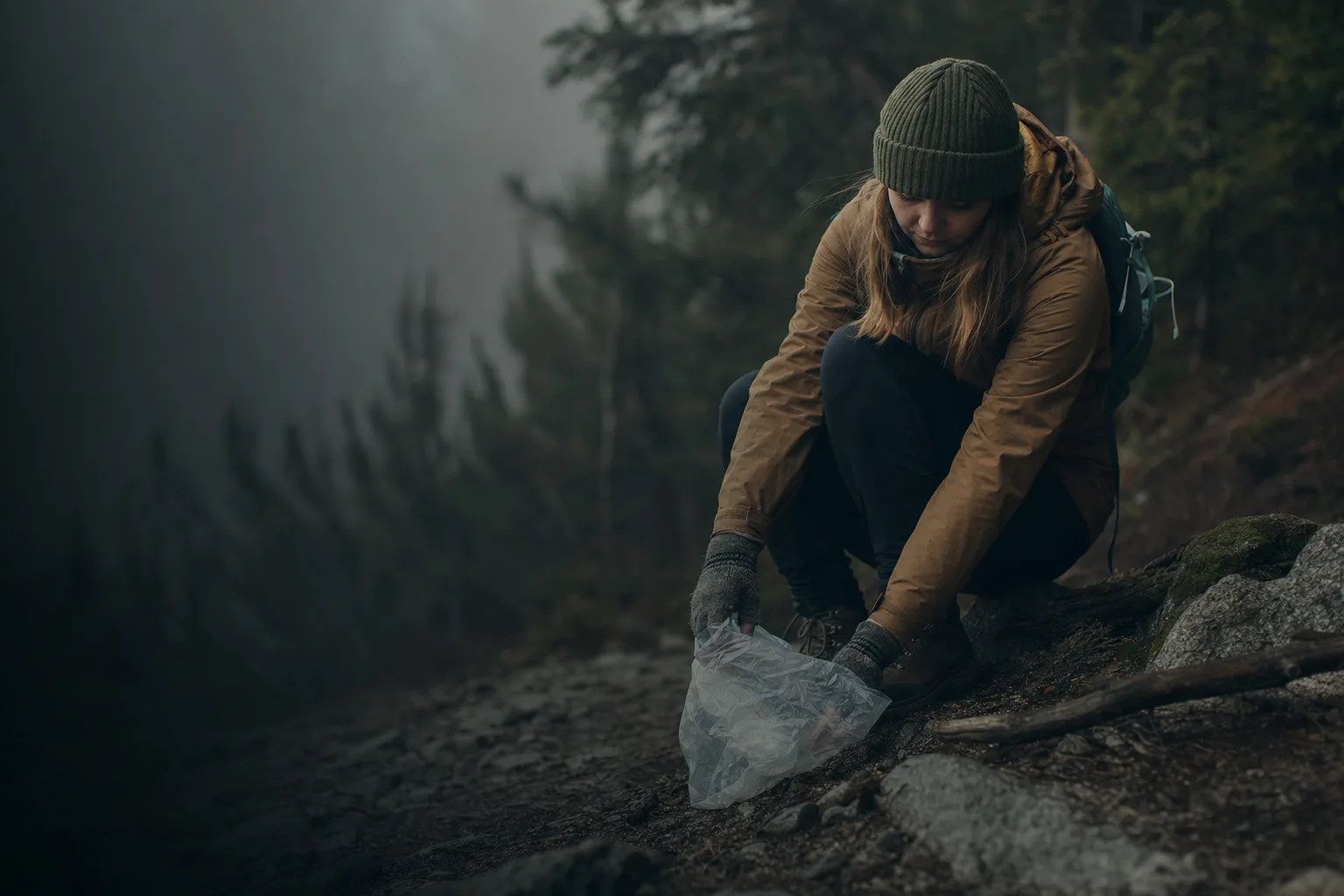
Beyond packing out your litter, the real principles ask something harder and more rewarding: to pass through the wild almost invisibly.
Most people can recite the headline of low-impact travel — pack out what you pack in — and stop there. The full set of principles goes much further, and taking them seriously changes not just how clean you leave a place, but how carefully you move through it in the first place.
Start before you go. Planning ahead, traveling in small groups, and choosing durable surfaces to walk and camp on prevents the damage that no amount of tidying can undo afterward. A single tent pitched on fragile alpine vegetation can leave a scar that lasts for years; the same tent on rock or established ground leaves nothing.
Human waste is the part people would rather not discuss, and precisely the part that matters most near popular routes and water. Burying it properly, well away from streams and camps, or packing it out entirely where the rules require, is basic respect for everyone who drinks from the same valley and everyone who comes after you.
The subtler principles are about presence rather than damage. Keeping wildlife wild by never feeding it, keeping noise low so others find the quiet they came for, and leaving interesting rocks, antlers, and flowers where they lie so the next person can discover them too. The aim is not merely to do no harm, but to pass through as though you were barely there at all.
Swap in your own notes here: the principle you underestimated at first, the wild place you watched get loved to death, and the habit that made the biggest difference to your own footprint. — Written by the editors.